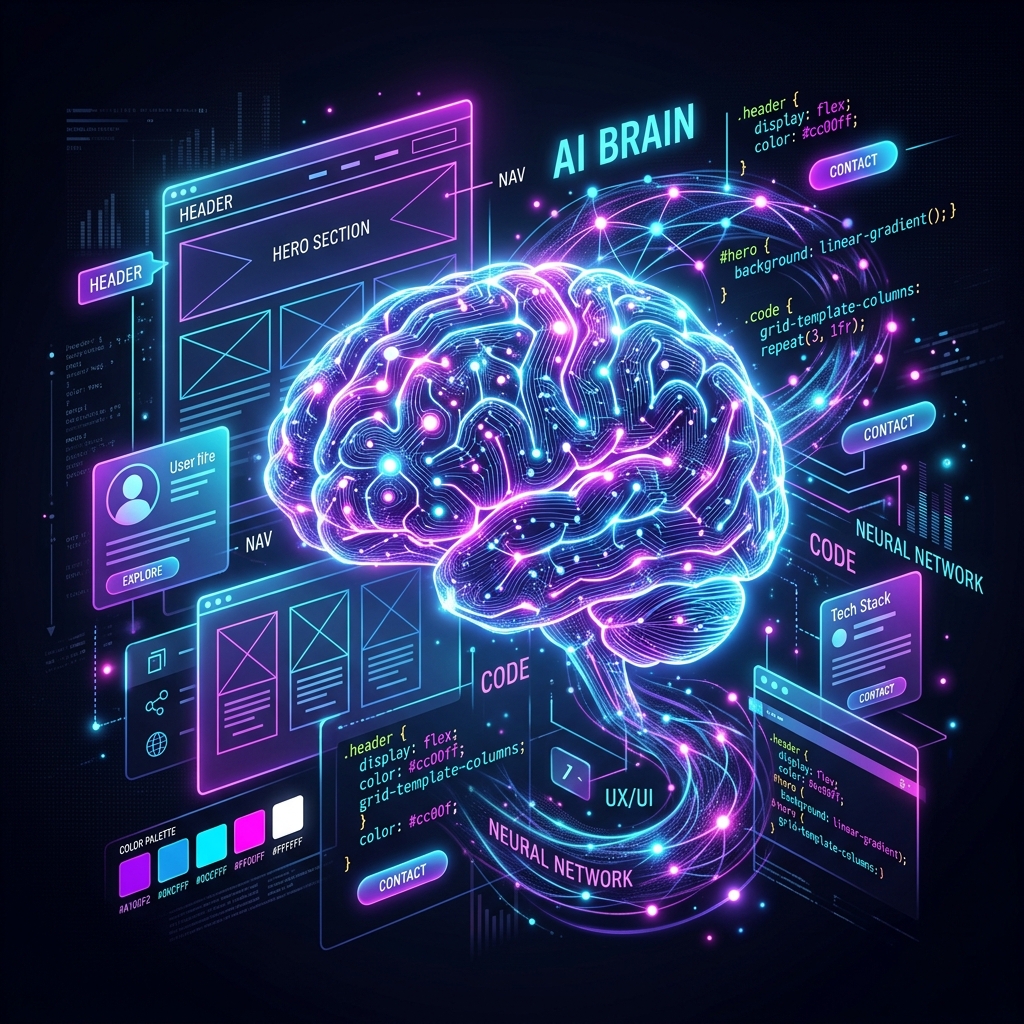
Generative AI is not a future trend — it is reshaping how websites are built, personalized, and optimized today. Here is what your business needs to understand.
1What Generative AI Actually Means for Web Design
Not long ago, designing a website meant weeks of back-and-forth between designers, developers, and clients — sketching wireframes, writing copy, building out page templates manually. Generative AI is compressing that timeline dramatically.
Generative AI refers to systems that can produce new content — visuals, text, code, layouts — based on prompts or existing data. In web design, this translates to tools that can draft a homepage layout from a single description, generate on-brand copy in seconds, or dynamically adjust what a visitor sees based on their behavior.
This is not about replacing the craft of web design. It is about what happens to businesses that choose to ignore it. Faster production, lower iteration costs, and more personalized user experiences are no longer competitive advantages — they're becoming the baseline.
Use Case #12AI-Generated Layouts and Wireframes
Design traditionally began with a blank canvas and hours of manual work. Today, tools like Framer AI and Figma's AI features can generate full wireframes, page sections, and component structures from a text prompt.
For businesses, this means faster prototyping cycles. A concept that used to take days to visualize can be iterated on in hours. Design direction gets validated earlier, mistakes surface sooner, and budgets stretch further.
When rapid layout generation removes bottlenecks, your team can invest more energy in the decisions that actually differentiate your brand — UX strategy, messaging, and creative direction.
3Personalized UX and Dynamic Content
One of the most powerful applications of generative AI in web design is personalization at scale. Rather than every visitor seeing the same static website, AI can adapt content, imagery, and calls-to-action based on who someone is, where they came from, or how they've behaved on your site before.
Behavioral Adaptation
Content that shifts based on how a user navigates your site.
Contextual Relevance
Location, device, and time-of-day influence what users see.
Return Visitor Logic
Different experiences for new vs. returning customers.
For small businesses and startups especially, this levels the playing field. Personalization was once the domain of enterprise companies with massive tech budgets. AI is making it accessible to businesses of all sizes.
Use Case #34AI Copywriting and Content Generation
Website copy is often the last thing businesses get right — and one of the first things that drives conversions or kills them. Generative AI can now produce on-brand headlines, product descriptions, meta copy, and page content with remarkable speed.
Tools like Adobe Firefly extend this beyond words into visuals — generating hero images, icons, and brand-consistent graphics that once required a full design team or expensive stock licenses.
The caveat worth naming: AI-generated copy and visuals are only as good as the strategy behind the prompts. Generic prompts produce generic output. The businesses seeing real results are using AI as a creative accelerator — with human strategy, brand voice, and editorial judgment directing every output.
AI can write a hundred homepage variations in the time it takes a human to write one. But deciding which variation to test, why, and what the data should tell you — that still requires human expertise.
5AI Tools Businesses Should Know About
You don't need to master every tool — but understanding what exists helps you have more informed conversations with your development partner and make smarter decisions about your digital investment.
Each of these tools is strongest in a specific area — layout generation, image creation, code assistance, or site building. Used strategically in combination, they dramatically reduce the time from brief to live website.
6What AI Still Can't Do
For all its capabilities, generative AI doesn't understand your business. It doesn't know why your customers hesitate on the pricing page, what emotional trigger makes someone book a call, or how your brand should feel different from every competitor in your space.
AI also doesn't handle nuanced accessibility standards, performance optimization, custom integrations, or the kind of iterative problem-solving that comes from genuinely understanding a client's goals over time.
The businesses winning with AI aren't the ones automating everything — they're the ones being strategic about what to automate and what to protect as human work. That balance is where great web design still lives.
Atomicslate Labs Team
The Atomicslate Labs Team team brings you expert-reviewed guides and practical architecture advice for businesses scaling in the modern web era.