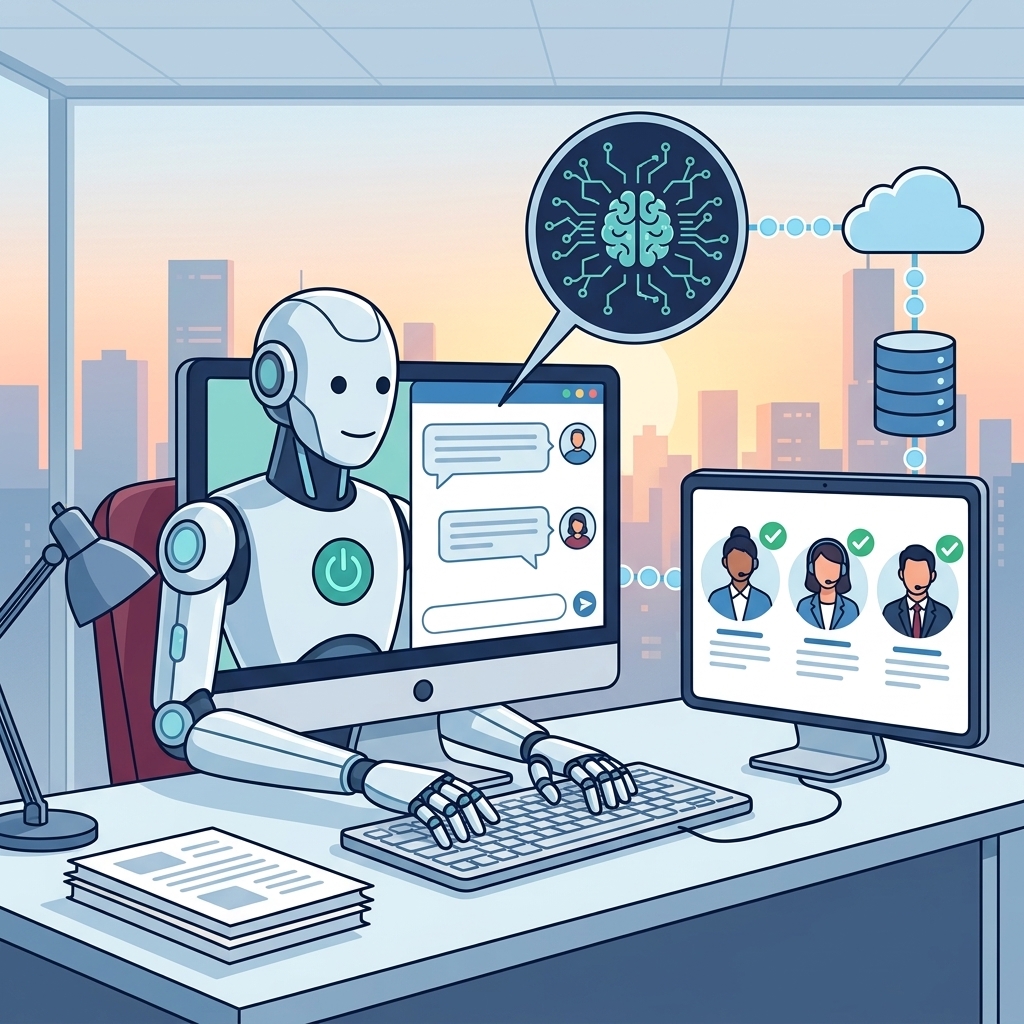
How AI-powered websites are transforming customer support in 2026 — conversational AI, self-service tools, and behind-the-scenes automation — explained simply for small business owners.
1Conversational AI: A Front Desk That Never Sleeps
The most visible version of this is the chat widget in the corner of a website — but what's behind it has changed substantially. Older chatbots followed rigid decision trees: click this button, then this one, then maybe you'd get an answer. Today's versions can understand a genuinely worded question and respond the way a knowledgeable person would, because they're built on the same kind of AI behind tools like ChatGPT.
The practical benefit for a small business is straightforward: your website can now answer real questions at 2am, on a Saturday, during a holiday — any time a human team member isn't available, which is most of the time for most small businesses. A large share of customers say 24/7 availability is the single feature they value most about this kind of support, and it's easy to see why: people don't stop having questions outside business hours, they just stop getting answered.
Most small businesses miss a meaningful share of the inquiries that come in — unanswered calls, unwatched chat windows, emails that sit for a day. Conversational AI doesn't eliminate that gap entirely, but it closes a large part of it without requiring anyone to be awake.
2Self-Service Tools: Letting Customers Answer Their Own Question
Not every customer wants to talk to anyone — human or AI. Plenty of people would rather just find the answer themselves, quickly, without a conversation at all. This is where AI-powered self-service tools are quietly doing a lot of work: smarter site search, AI-generated FAQ sections that actually match how people phrase real questions, and knowledge bases that surface the right article instead of a generic list of everything you've ever published.
The shift here is about matching how people actually ask things, not how a business happens to have organized its own content. A customer searching "can I change my order after I place it" shouldn't have to guess that the answer lives under a page called "Order Policies" — modern AI-powered search can connect that question to the right answer directly, the way a knowledgeable employee would if you asked them out loud.
For routine, well-defined questions — order status, business hours, what something costs, how a policy works — a clear majority of customers actually prefer this kind of fast self-service over waiting for a person, simply because it's faster and they're already getting what they need. The businesses doing this well aren't trying to make every interaction feel personal; they're making the simple ones fast, so the time saved can go toward the few interactions that genuinely need a person's attention.
3Behind the Scenes: The Support Your Customers Never See
Some of the most valuable AI work on a modern website happens somewhere customers never directly interact with at all.
When a message does need a person, AI can read it first and route it intelligently — flagging an urgent issue so it doesn't sit in a queue behind routine questions, detecting frustration in someone's wording so a more careful response gets prioritized, or simply sorting incoming messages so your team isn't manually triaging everything that arrives. None of this replaces the judgment a person brings to a genuinely difficult situation; it just means the right messages reach a person faster, instead of getting stuck in a generic inbox waiting their turn.
This category also includes things a small business owner might never think to ask for, but benefits from anyway: drafting a first-pass reply for a team member to review and personalize rather than write from scratch, summarizing a long back-and-forth so anyone picking up the conversation gets up to speed in seconds, or simply keeping a running, organized record of what's been asked and answered so the same question doesn't have to be solved fresh every time it comes up.
What This Adds Up To
None of these three things — conversational AI, self-service tools, behind-the-scenes routing — are exotic anymore. Together, they represent a meaningful shift in what a website's actual job is. It used to be a place that described your business. Increasingly, it's a place that actively does support work, around the clock, without anyone needing to be at a desk for it to happen.
It isn't "everyone else is doing it," even though a fast-growing share of businesses your size already are. It's that the gap between a website that just sits there and one that actually helps people get answered is smaller and more affordable to close than ever — and the businesses closing it are quietly capturing the customers who used to give up and go elsewhere.
Atomicslate Labs
The Atomicslate Labs team brings you expert-reviewed guides and practical architecture advice for businesses scaling in the modern web era.